Well, I finally did it. I got my first analog synth, the Moog Matriarch.
For about three years I went back and forth on this purchase. I considered the Oberheim TEO-5, the Moog Grandmother, the Messenger, the Muse, and a few others. My starting point was simple: what would pair nicely with my Akai MPC Live 2 and TR-8S? Once I figured out which synth checked that box most cleanly, I didn’t like the answer. It was the Moog Messenger smaller, modern, and relatively easy to work with as a “first” synth. On paper it made sense. In practice, it didn’t feel like the one.
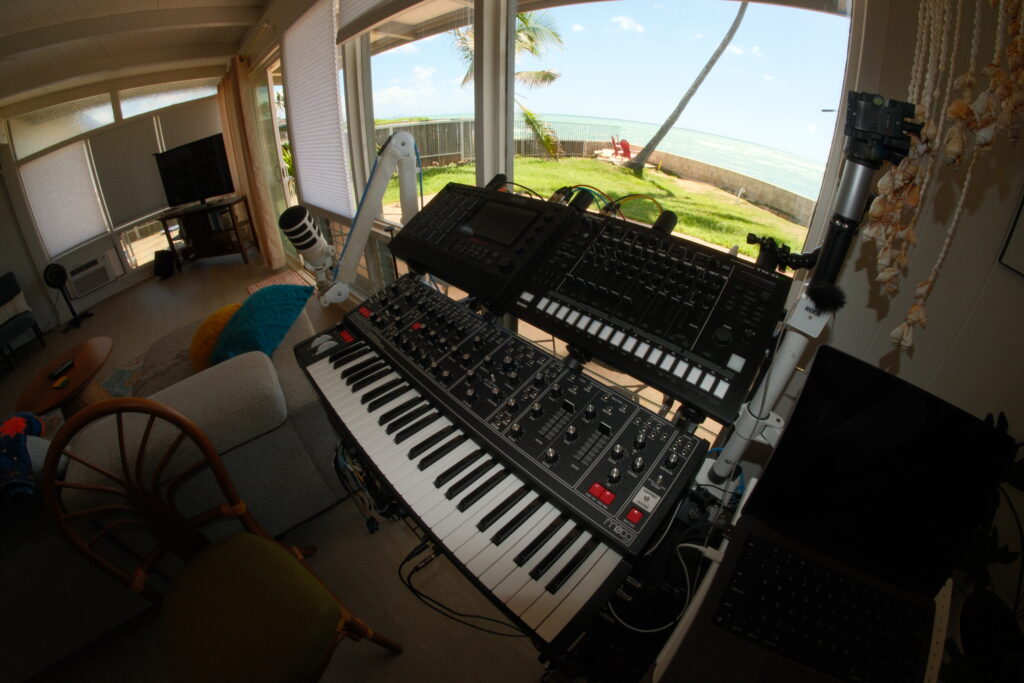
I then spent a lot of time with the Moog Grandmother. Plenty of YouTube reviews call it one of the best first analog synths you can buy, and they’re not wrong. It’s approachable, it sounds great, and it teaches you a lot. Still, as I went further down the rabbit hole of synthesis, the Matriarch kept standing out. Reviewers rarely spent the most time talking about its feature set. What they kept coming back to was how good it sounded. Yes, it has limits. It lacks certain modern conveniences. But that thing just sounds amazing—raw tonality, real growl, straightforward knobs, and enough semi-modular capability to keep you learning for a long time.
Now that I’ve spent time with an actual analog synth (and more outboard hardware in general), I can feel the shift in how I make and think about music. In this video I break down what’s changed since I moved further into analog synthesis and hardware-based production and performance.
Fair warning: I’m still pretty nonchalant on YouTube. I don’t quite have the deliberate, polished energy of a lot of the cooler creators out there yet. I’m working on it.

